
UN Ocean Conference highlights the need for more global measures to protect the world’s oceans
Published
The UN Ocean Conference in Nice concluded on 13 June with the adoption of the Nice Ocean Action Plan, a political declaration to strengthen global efforts to protect oceans. Minister for Climate and the Environment Romina Pourmokhtari headed Sweden’s delegation.
-
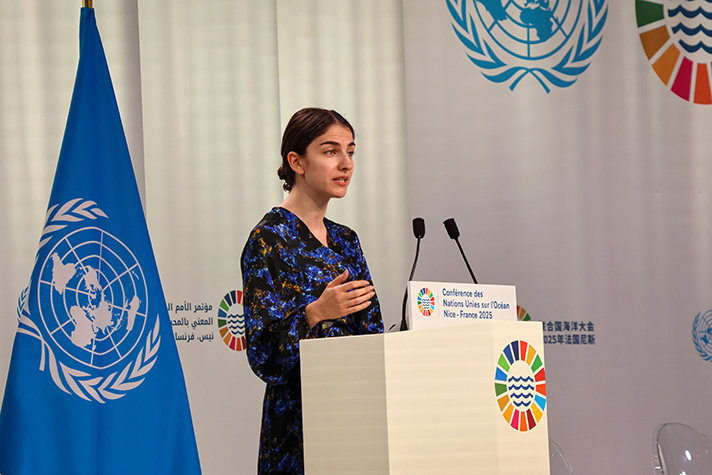
Minister for Climate and the Environment Romina Pourmokhtari delivered Sweden’s national statement to the Conference.
Photo: Jonatan Klefbom/Government Offices of Sweden.
-
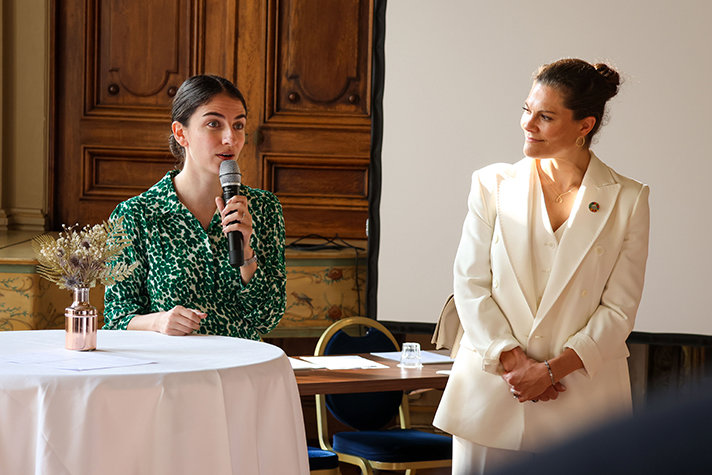
Minister for Climate and the Environment Romina Pourmokhtari and HRH Crown Princess Victoria.
Photo: Jonatan Klefbom/Government Offices of Sweden.
-
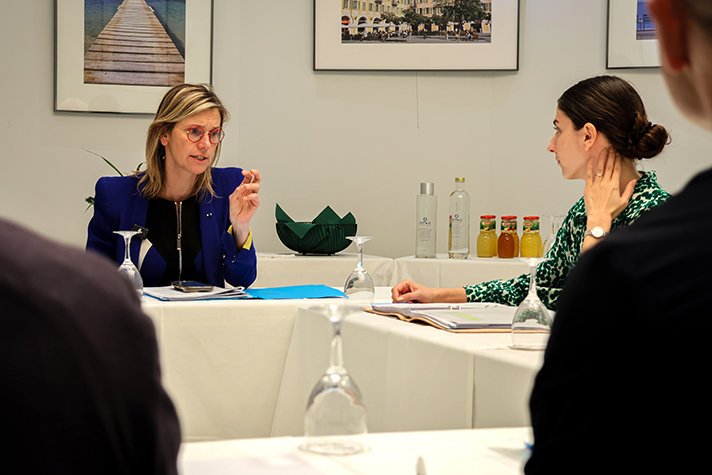
Minister for Climate and the Environment Romina Pourmokhtari in a meeting with the French Minister for the Ecological Transition Agnès Pannier-Runacher.
Photo: Jonatan Klefbom/Government Offices of Sweden.
-
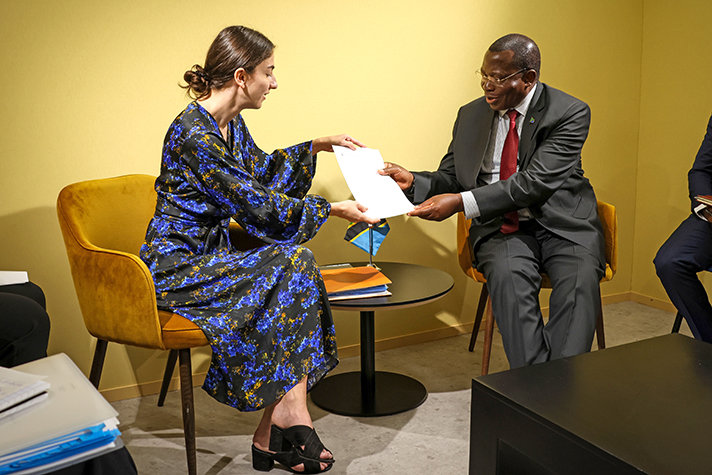
Minister for Climate and the Environment Romina Pourmokhtari presents a letter about Swedish solutions to the climate issue to Tanzania's vice president Philip Mpango.
Photo: Jonatan Klefbom/Government Offices of Sweden.
-
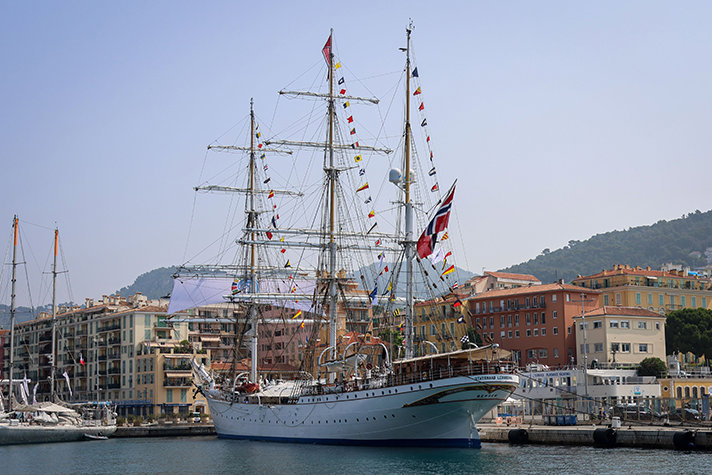
Several Nordic meetings were held on the Norwegian tall ship Statsraad Lehmkuhl.
Photo: Jonatan Klefbom/Government Offices of Sweden.


The UN Ocean Conference, or UNOC–3, sought to accelerate the pace of work on international marine environments and mobilise all actors to achieve increased protection and sustainable use of oceans in line with the Sustainable Development Goal on oceans, SDG 14. France and Costa Rica hosted the conference.
Nice Ocean Action Plan adopted
The Conference saw the adoption of the Nice Ocean Action Plan, which underlines the importance of oceans to the climate and that the vital link between oceans, climate and biodiversity requires more global measures to combat climate change and ocean acidification. The Action Plan also stresses the importance of establishing a global agreement on plastic pollution in marine environments. Furthermore, it reaffirms the need to adopt a source-to-sea approach that strengthens integrated coastal zone management and marine planning to enhance the resilience of ecosystems and coastal communities.
The Conference resulted in more than 800 voluntary commitments being made by states, companies and other actors seeking to contribute to achieving SDG 14, for example through financing, setting targets and partnerships.
Sweden submits voluntary commitments
The Government made five commitments to the UN prior to the Nice Conference to demonstrate various current initiatives for ocean environments and relevant development assistance-related projects. These include the following:
- Sweden is banning scrubber discharges from ships in its territorial waters, which will reduce emissions of hazardous substances.
- Sweden has taken initial steps towards a general ban on bottom trawling in marine protected areas in coastal waters with the possibility of certain exemptions. The Government presented a bill on this issue that has been adopted by the Riksdag.
- Sweden is strengthening its national research programme on oceans and waterways.
- Sweden is providing funds to IOC-UNESCO for sustainable ocean use in Africa and to The Ocean Foundation to strengthen developing countries’ work on combatting ocean acidification.
European Ocean Pact to promote the blue economy
During the Conference, European Commission President Ursula von der Leyen unveiled the European Ocean Pact, which is a new strategy to better protect oceans, promote a blue economy and support the wellbeing of people who live in coastal areas. The Pact presents EU policies related to the ocean and creates a common framework to address threats to oceans, coastal communities, islands and outermost regions.
Minister for Climate and the Environment Romina Pourmokhtari headed Sweden’s delegation that included participants from several government agencies, research, business and relevant ministries. Ms Pourmokhtari delivered Sweden’s national statement to the Conference and participated in several side events on issues such as increased ocean protection, regional ocean cooperation, ocean awareness and the Swedish business sector’s commitment to the oceans. HRH Crown Princess Victoria also participated in the delegation.
Chile and South Korea will host the next Ocean Conference in 2028.
Sweden preparing to ratify the BBNJ
Sweden actively supported global negotiations on a new agreement for the protection and sustainable use of biodiversity in ocean regions beyond national jurisdiction, known as the UN Agreement on Biodiversity Beyond National Jurisdiction (BBNJ). This is a necessary tool to achieve the objective of protecting 30 per cent of the ocean’s surface by 2030. The Ocean Conference created considerable momentum for the entry into force of the BBNJ.
Sweden signed the agreement in September 2023 and aims to ratify and implement the Agreement once new legislation is in place. Certain countries are able to ratify first and legislate later, but Sweden has a different system. This explains why some countries were quicker to ratify than Sweden.
As an inquiry is needed to amend Swedish legislation, the Ministry for Foreign Affairs appointed as soon as the Agreement was finalised in New York. The Inquiry’s proposals were presented to Minister for Foreign Affairs Maria Malmer Stenergard during the first half of this year. Sweden’s accession to new global agreement to protect the environment of the world’s oceans (in Swedish)
The Inquiry’s proposals are now being circulated for comment. The Government will then present legislative proposals in accordance with Sweden’s legislative process. Thereafter Sweden will be able to ratify the agreement.
