
Strong engagement for financing of the nuclear energy ecosystem
Published
On October 7, the Government held the Nordic-Baltic Nuclear Investment Summit. Minister for Energy, Business and Industry Ebba Busch hosted the Summit together with Finland’s Minister of Climate and the Environment Sari Multala. Participants in the Summit included six ministers and more than 200 representatives of companies from the nuclear energy and finance sectors of four continents.
-
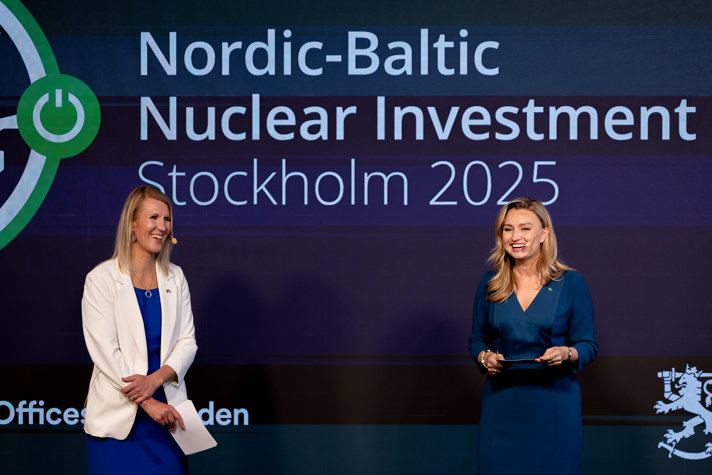
From left: Sari Multala, Finland´s Minister of Climate and the Environment and Ebba Busch, Minister for Energy, Business and Industry.
Photo: Magnus Liljegren/Government Offices of Sweden
-
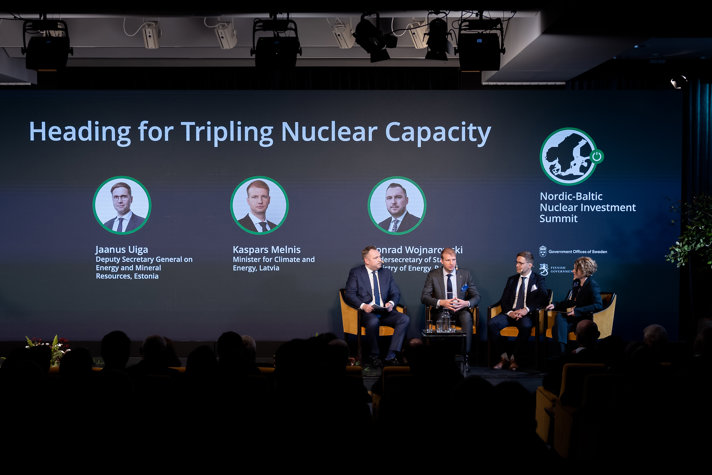
Panel discussion with: Melnis, Minister for Climate and Energy, Lettland, Jaanus Uiga, Deputy Secretary General on Energy & Mineral Resources, Estland and Konrad Wojnarowski, Undersecretary of State, Ministry of Energy, Polen.
Photo: Magnus Liljegren/Government Offices of Sweden
-
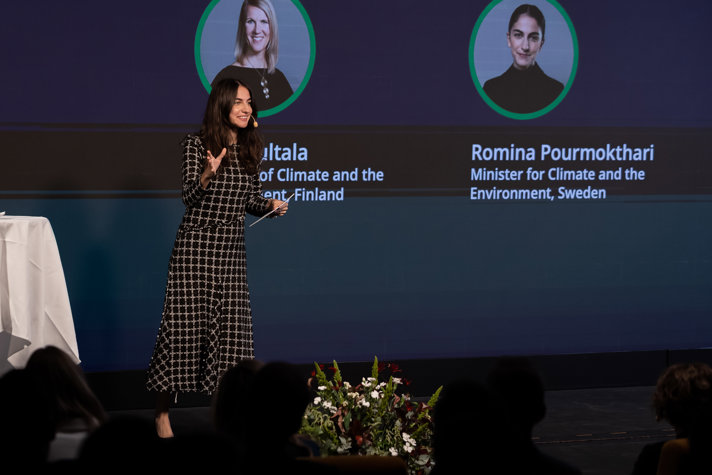
Romina Pourmokhtari, Minister of Climate and the Environment
Photo: Magnus Liljegren/Government Offices of Sweden
-
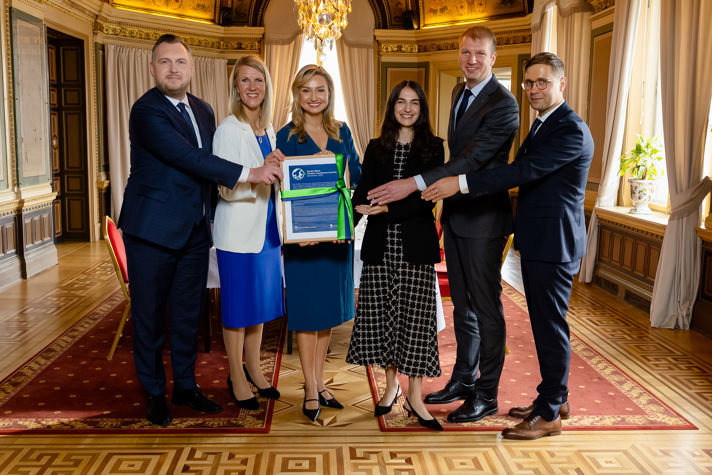
Konrad Wojnarowski, Undersecretary of State, Ministry of Energy (Poland) Sari Multala, Minister of Climate and the Environment (Finland), Ebba Busch, Minister for Energy, Business and Industry and Deputy Prime Minister (Sweden), Romina Pourmokhtari, Minister for Climate and the Environment (Sweden), Kaspar Melnis, Minister for Climate and Energy (Latvia) och Jaanus Uiga, Deputy Secretary General on Energy and Mineral Resources (Estonia).
Photo: Magnus Liljegren/Government Offices of Sweden
-
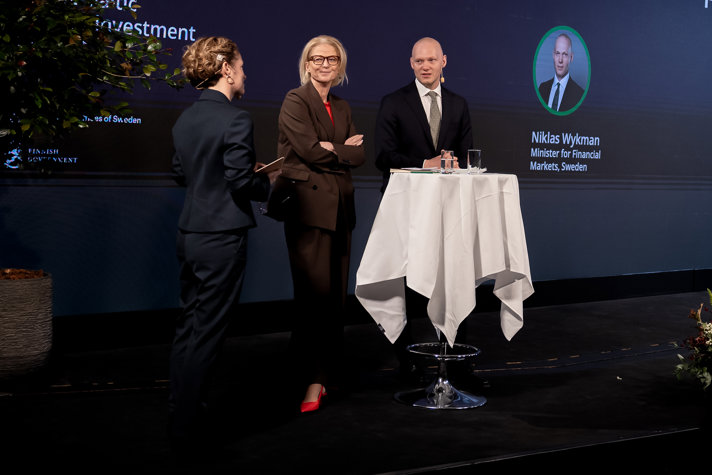
Elisabeth Svantesson, Minister for Finance, and Niklas Wykman, Minister for Financial Markets.
Photo: Magnus Liljegren/Government Offices of Sweden
-
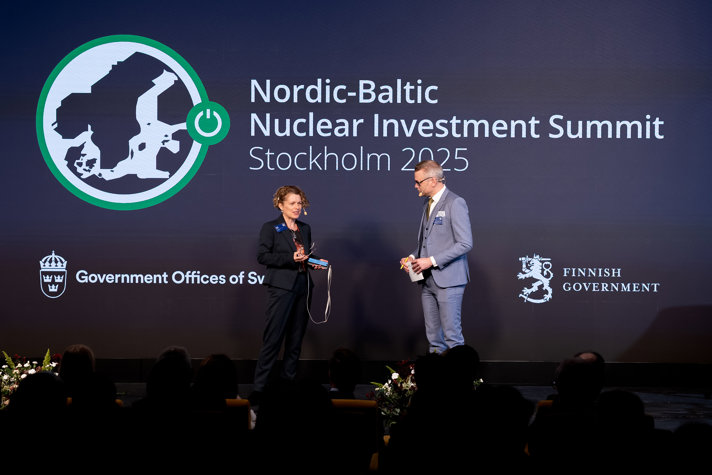
Moderator Kirsty Gogan and Carl Berglöf, Sweden’s national nuclear new-build coordinator.
Photo: Magnus Liljegren/Government Offices of Sweden
-
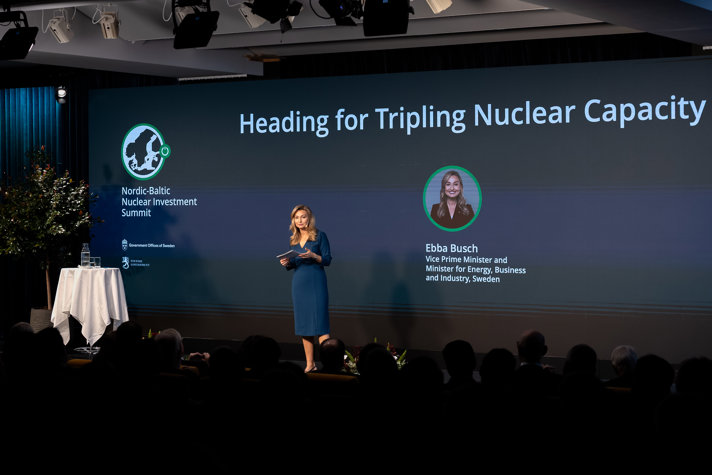
Ebba Busch, Minister for Energy, Business and Industry, delivered the opening speech at the conference.
Photo: Magnus Liljegren/Government Offices of Sweden
-
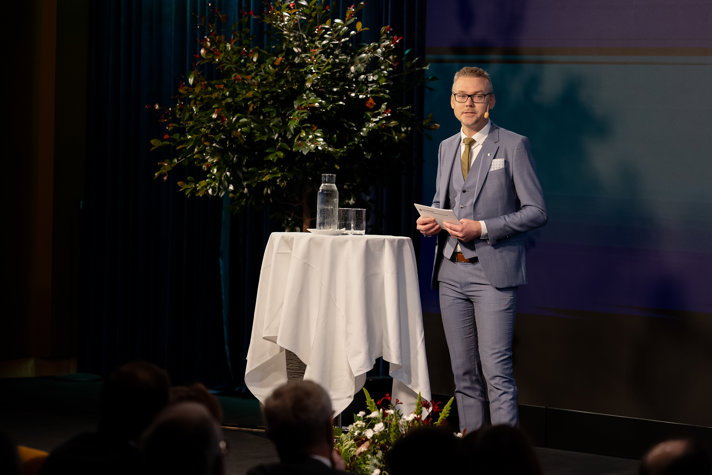
Carl Berglöf, Sweden’s national nuclear new-build coordinator
Photo: Magnus Liljegren/Government Offices of Sweden


Discussions centred on the conditions for effective expansion of new nuclear energy and how the countries represented at the Summit can restore and establish competitive supply chains, with a specific emphasis on the role of the financial sector.
In addition to representatives from Sweden and Finland, several ministers and high-level representatives of Estonia, Latvia and Poland were in attendance. There was also a strong contingent from industry, suppliers and potential investors in new nuclear energy.
This was likely the first time since 1958 that Sweden hosted a nuclear energy conference gathering representatives from the financial sector, the entire nuclear energy value chain and politicians.
New nuclear energy based on extensive know-how and long-standing history
In her address, Ms Busch emphasised that Sweden, like many other countries, has a long history of building and operating nuclear power plants. The use of nuclear energy has gradually decreased since the late 1970s. However, that period is over now, and interest in nuclear energy and its expansion is growing rapidly.
“Sweden is a proud nuclear energy nation. There is broad political consensus on nuclear energy in Sweden and the countries around the Baltic Sea. The time of a shrinking nuclear energy market is over. Nuclear energy is growing once again – rapidly. Politics and the nuclear sector must now show the world that we are capable of not only discussing and arguing, but delivering.”
Interest in nuclear energy around the world is growing, and it is no longer a question of whether, but rather how much and how quickly nuclear energy can be expanded. Many countries have invested heavily in nuclear energy.
“A global race is under way, and many forms of cooperation have been initiated in order to develop and utilise nuclear technology. We are doing this not only for a secure electricity supply or for our competitiveness, but for the future that we all share.”
New regulatory frameworks enable new nuclear energy
Minister for Climate and the Environment Romina Pourmokhtari described the Government’s work to create conditions for new nuclear energy as the basis for effective climate transition.
The Government’s latest proposal would permit construction of nuclear facilities along the entire Swedish coast.
“Nuclear facilities must be located on sites with adequate conditions. The current ban rules out sites that could be suitable, without any option for an individual evaluation of the specific case. The legislative amendments would create conditions for more actors looking to construct and invest in coastal nuclear facilities,” says Ms Pourmokhtari.
At the same time, the proposal would maintain the protection of natural and cultural heritage. It is proposed that the legislative amendments enter into force on 1 July 2026.
Investments needed throughout the ecosystem
Carl Berglöf, the Government’s national nuclear new-build coordinator, stressed the need for an expanded nuclear ecosystem, wherein collaboration throughout the production chain and development of expertise work in tandem. This is necessary to ensure cost-effective expansion of nuclear energy.
Each nuclear power plant contains hundreds of thousands of components that must be made available through a robust and clearly defined supply chain.
“For this reason, the support of banks and private financial institutions is welcome in the economic development of this production chain. Collaboration between central government and private financing is key to enabling the full potential of the nuclear sector. Central government ensures that projects can start through the financing model. This creates opportunities to invest in the surrounding infrastructures with lower financial risk,” explained Mr Berglöf.
The Swedish financing model
Minister for Finance Elisabeth Svantesson talked about Sweden’s unique conditions for growth and investment and the new growth journey on which the Government has embarked, with nuclear energy being a key component. Minister for Financial Markets Niklas Wykman explained the Government’s long-term commitments that incentivise private investment in new nuclear energy.
State aid for investments in new nuclear energy is provided in the form of government loans and two-way contracts for difference. These two components provide financial support at different stages of a project. The third component is a risk- and profit-sharing mechanism.
A special secretariat at the Ministry of Finance is responsible for managing this state aid. The secretariat receives and examines applications, and also represents the Government in negotiations on the conditions for the aid and during the implementation of the European Commission’s state aid investigations.
Broad consensus paves way for joint declaration
Government representatives from Latvia, Estonia and Poland also took part in the Summit programme. Their panel discussion covered national ambitions, plans and the need for cooperation to enable new nuclear energy.
In conjunction with the conference, Estonia, Finland, Latvia, Poland and Sweden presented a joint written statement. It underscores the potential of nuclear energy to contribute to better energy security, more competitive electricity prices and the fossil fuel phase-out.
Expertise, investment and cooperation summed up the day
In her closing remarks, Ms Multala emphasised that Finland is strongly committed to helping establish new nuclear energy.
“The Summit showcased nuclear energy’s central role in Nordic-Baltic region’s energy system. Here in Finland, we have maintained our nuclear power expertise for decades, and we possess some of the world’s best know-how across the entire nuclear power value chain. We are committed to advancing investments and regulatory frameworks to unlock the potential of nuclear energy”, says Ms Multala.
Carl Berglöf highlighted the importance of financial capital from the private sector:
“When capital meets technology, things can really start to happen, but this requires faith in regulatory frameworks and project implementation. This is where the banks play a critical role, and the increasing number of banks around the world investing in nuclear energy is a welcome development. Private financial institutions are also showing renewed interest in investing in Swedish nuclear energy infrastructure.”
Ebba Busch concluded the Summit with a few takeaways from a Swedish perspective:
“We can see a strong desire to invest. We can see that planning is in progress and taking place as we speak; it’s palpable. Four Swedish ministers were here today, which attests to the strong support within the Government. There is also political stability among the Nordic-Baltic countries and a shift towards more nuclear energy is taking place within the EU.”
“Sweden is ready to take a leading role. My door is open. Together we can deliver for future generations. I look forward to welcoming you back!”
About the Summit programme
The day was filled with presentations, panel discussions and reflections, wherein the entire value chain was shown based on five areas:
- Creating the right conditions for nuclear energy from a regulatory perspective.
- Sweden’s new financing model, which facilitates launching the initial projects in Sweden.
- The investor perspective of new nuclear energy based on the need to frame projects with reasonable risk distribution.
- The project developer perspective, which needs to balance the developer’s own risk-taking with central government and the construction companies that are contracted.
- The need for a nuclear energy ecosystem based primarily on the industrial capabilities that need to be available both during the construction period and after commissioning.
The Summit was organised in cooperation with Sweden’s national nuclear new-build coordinator, Carl Berglöf.
