
Government to draft national action plan against PFAS
Published
The Government aims to reduce the spread of PFAS ‘forever chemicals’ in order to protect the environment and human health. A national action plan to reduce the spread of PFAS into waterways and in nature will be drafted in the coming months.
-
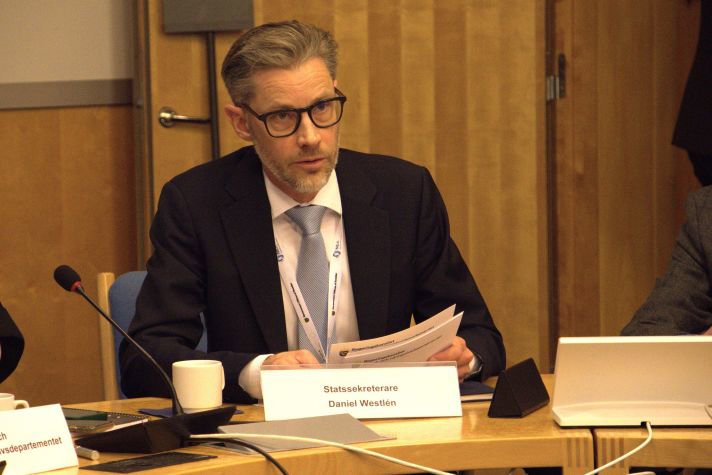
State Secretary Daniel Westlén hosted a meeting with sectoral organisations on the action plan against PFAS.
Photo: Government Offices of Sweden.
-
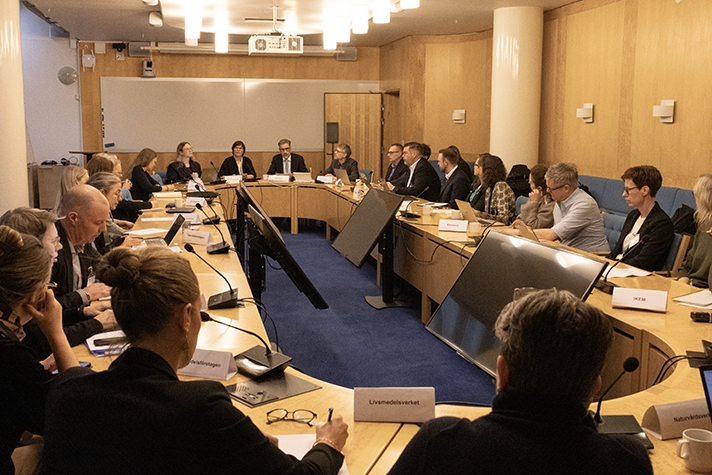
Participants from various sectoral organisations shared their views on measures against PFAS.
Photo: Government Offices of Sweden


PFAS substances are now prevalent everywhere in the environment, including inside human beings. It is essential to prevent and address exposure to PFAS and other harmful chemicals. PFAS in the environment pose a particular threat to our drinking water and food.
The State Secretary met with sectoral organisations
A national action plan to reduce the spread of PFAS will be drafted the coming months. State Secretary Daniel Westlén met with stakeholders representing several sectoral organisations to hear their thoughts and proposals on how to manage and prevent PFAS contamination.
Those organisations operate in sectors such as waste management, recycling, water purification, agriculture, aviation, forestry and technology. They discussed the challenges in reducing PFAS contamination, such as carrying out and financing decontamination, developing alternatives to PFAS and implementing actions at national level.
There was consensus among the participants that the problem is both large-scale and urgent, but at the same time they pointed out the recent gains in knowledge of how PFAS are circulated and how to destroy them. Several of the organisations highlighted the need for stronger coordination at national level and emphasised that measures taken at national level must work in tandem with regulations at EU level.
They also stressed the need for major investments in research and development in alternatives to PFAS.
Government agencies discussed PFAS pollution
The Ministry has also met with around 15 relevant government agencies responsible for issues including nature conservation, agriculture, food, and the defence sector in order to obtain their views on the work. The agencies agreed that long-term efforts are required to reduce pollution from PFAS. They emphasized that it is important both to reduce the inflow of new emissions and to limit the spread from already contaminated areas.
Among the issues raised in the discussion with the agencies were collaboration and learning from each other, an overview of groundwater contamination; financial and practical responsibility for the remediation of contaminated areas, guidance for supervision, and opportunities and challenges with the substitution of PFAS in certain areas of use.
Several countries have already drafted national plans, including Austria, Denmark and France. These action plans integrate environmental monitoring, human biomonitoring, market monitoring, decontamination efforts and measures to better inform the general public and communicate the risks associated with PFAS.
Additional funding allocated
The Government has allocated additional funding this spring to intensify the efforts to manage problems associated with PFAS, and especially the work on the national action plan to reduce PFAS. In the Budget Bill for 2026, the Government allocated SEK 85 million to appropriation 1:4 ‘Decontamination and restoration of polluted areas’ to fund ongoing efforts to reduce the spread of PFAS in the environment. In 2027, the appropriation is expected to increase by SEK 110 million, and by SEK 135 million in 2028.
Facts about PFAS
Per- and polyfluoroalkyl substances (PFAS) are a large group of chemicals that are used for their water- and grease-resistant properties. They are also referred to as ‘forever chemicals’ because they break down very slowly over time. Studies have shown that PFAS exposure can be linked to certain types of cancer and reproductive disorders. There is good reason to consider all PFAS harmful to the health.
PFAS have spread in the water and air through activities such as firefighting and in landfills and sewage treatment facilities. These substances can now be found in drinking water and food, as well as products such as pharmaceuticals, firefighting foams and cosmetics, and in all waste flows.
